Match platform to the space
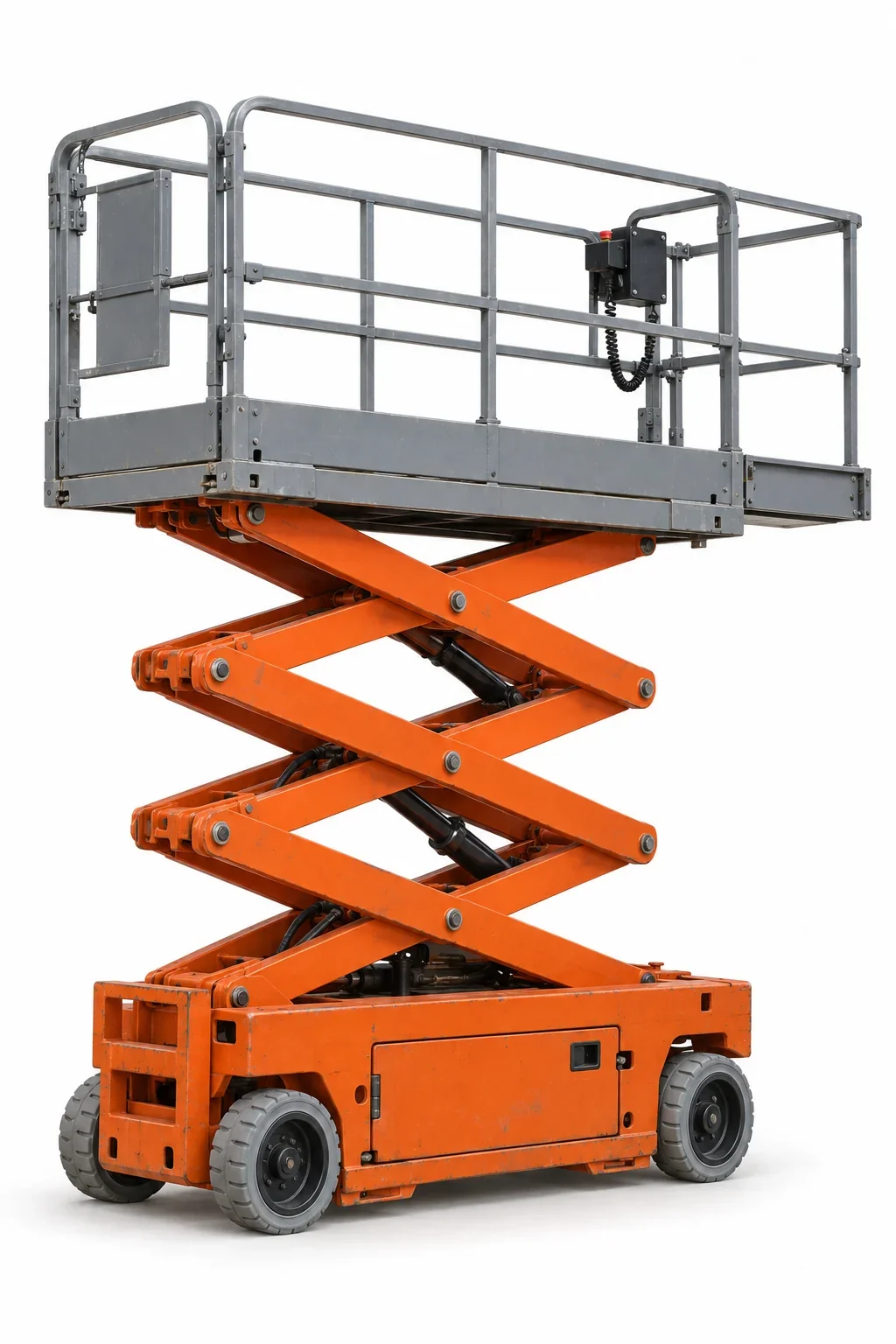
Electric scissor lifts go straight up, so the machine must sit directly under the work. In New Orleans’ narrow service hallways and older interiors, machine width and turning radius often matter as much as platform height. Low stowed heights make it easier to pass through doorways and under low beams before elevating.
Floor loading and slab conditions
Interior slabs vary by age and reinforcement. Check floor ratings for mezzanines, stages, and older warehouse bays. Non-marking tires and clean electric drive protect finished floors in commercial spaces and event halls.
Heat and humidity inside and out
Even inside, New Orleans’ humidity migrates through buildings and can affect electrical and hydraulic components. Units with reliable cooling and recent maintenance are better suited to longer shifts under warm conditions or near open dock doors.
Key measurements to have on hand
- Target height and overhead clearance at the work area
- Minimum doorway and corridor widths along the travel path
- Elevator car dimensions and rated capacity, if applicable
- Floor load limits where the lift will operate
- Platform size needs for materials like duct sections, fixtures, or signage
When a scissor isn’t enough
If the task requires reaching over seating, machinery, or scenery, an articulating boom may solve the geometry better than a vertical platform. See /aerial-lift-rental/ or /boom-lift-rental/ for comparisons.
Related pages: - Rough-terrain lifts for exterior work: /rough-terrain-scissor-lift-rental/ - Aerial overview: /aerial-lift-rental/ - Boom comparison: /boom-lift-rental/